Trézor Suite Onboarding Guide – Start Using Your Hardware Wallet Safely
Introduction
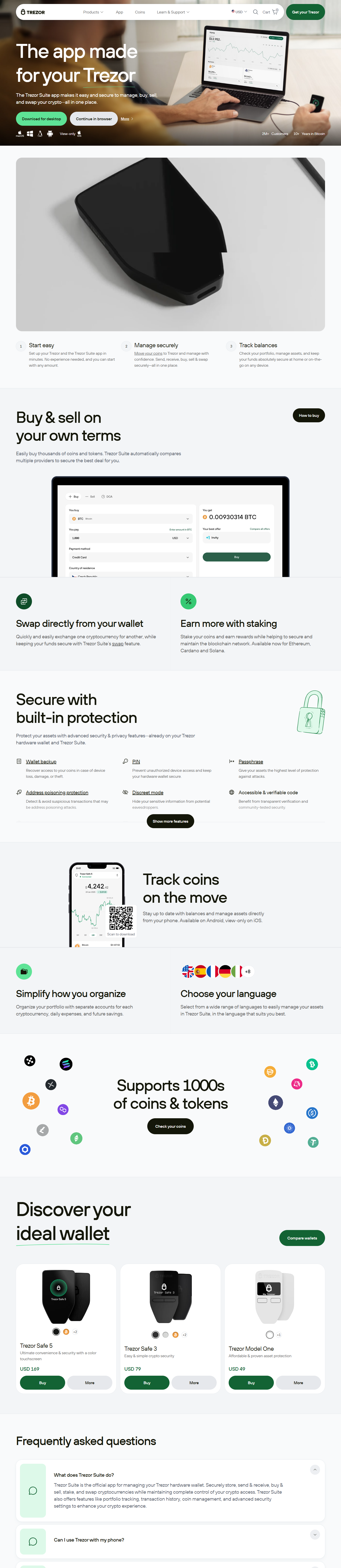
Trézor Suite is the official software environment created to help users operate their Trezor® hardware wallets securely and efficiently. This onboarding guide is written for users who are starting fresh and want a clear understanding of how to use the application without confusion or risk.
Managing cryptocurrency requires more than convenience. It requires awareness, responsibility, and secure tools. Trézor Suite is designed to support self-custody, ensuring users remain the only ones in control of their digital assets while benefiting from a clean and practical interface.
What Trézor Suite Is and Is Not
Trézor Suite is not an online wallet, exchange account, or cloud-based service. It does not hold funds, store private keys, or require user registration. Instead, it functions as a secure interface that allows communication between the hardware wallet and blockchain networks.
All sensitive actions, including signing transactions, are performed on the physical device. The software simply displays information and sends requests for approval.
Why Hardware Wallet Software Matters
Using a hardware wallet without proper software would make it difficult to manage assets efficiently. Trézor Suite fills this gap by offering visibility, organization, and control while preserving the hardware-first security model.
This approach reduces dependence on centralized platforms and minimizes exposure to online threats such as phishing, malware, and unauthorized access.
Access Methods: Desktop and Browser
Trézor Suite can be accessed through a desktop application or directly through a supported web browser.
The desktop application is often preferred by users who want a stable, dedicated environment. It operates locally and avoids many browser-related risks.
The browser-based version is useful for users who need flexibility or temporary access. Despite running online, it still enforces hardware confirmation for all sensitive actions.
Preparing for a Secure Start
Before beginning the onboarding process, users should prepare a safe setup environment. This includes using a trusted computer, ensuring privacy during setup, and avoiding public or shared devices.
Users should also have pen and paper ready to record important information during the initial device setup process.
Connecting the Hardware Wallet
Once the device is connected to the computer via USB, Trézor Suite automatically detects it and initiates the onboarding flow. The application guides users step by step, making the process easy to follow even for beginners.
If the device is brand new, it will require initialization. This includes setting security parameters and generating a recovery phrase.
Understanding the Recovery Phrase
The recovery phrase is a sequence of words that acts as a master key to the wallet. It is the only way to restore access if the device is lost, damaged, or replaced.
This phrase must be stored offline and kept private. It should never be typed into a computer, saved digitally, or shared with anyone. Protecting this phrase is essential to long-term security.
Setting Up Accounts Inside Trézor Suite
After completing the initial setup, users can create accounts for different cryptocurrencies. Each account represents a unique blockchain address and can be labeled for easy identification.
Creating multiple accounts allows users to separate funds for different purposes, making portfolio management clearer and more organized.
Viewing and Tracking Balances
Trézor Suite provides a dashboard that displays balances across all connected accounts. Users can review transaction history, check confirmations, and monitor account activity in real time.
This visibility helps users stay informed without relying on third-party tracking tools or external services.
Receiving Cryptocurrency Securely
To receive funds, users generate a receiving address within Trézor Suite. The address is shown on both the computer screen and the hardware wallet display.
Verifying that both addresses match before sharing is an important safety step. This protects against address substitution attacks caused by malicious software.
Sending Cryptocurrency with Hardware Confirmation
When sending funds, users input transaction details in the application. Before the transaction is finalized, the hardware wallet displays all relevant information for review.
Only after the user confirms the transaction physically on the device is it broadcast to the blockchain. This ensures that no transaction can occur without user consent.
Fee Selection and Network Awareness
Every transaction requires a network fee. Trézor Suite allows users to choose fee levels based on urgency and network conditions.
Automatic fee suggestions are suitable for most users, while advanced users can customize fees to optimize cost or confirmation speed.
Privacy and Advanced Management Tools
Trézor Suite includes features designed to improve privacy and transaction control. Users can hide balances, manually select transaction inputs, and adjust advanced settings.
These tools help users reduce data exposure and gain deeper insight into how their transactions are processed.
Supported Assets and Ongoing Compatibility
The software supports a wide range of cryptocurrencies and token standards. Users can manage multiple asset types within a single interface.
Regular updates expand compatibility and ensure continued support as blockchain networks evolve.
Optional Third-Party Integrations
Some versions of Trézor Suite offer optional integrations that allow users to exchange or purchase cryptocurrencies through external providers. These features are designed to preserve self-custody.
Even when using these tools, all transactions must be approved on the hardware wallet.
Software and Firmware Updates
Keeping Trézor Suite and device firmware updated is essential for maintaining security. Updates often include performance improvements, new features, and protection against newly discovered threats.
Users should apply updates only through official channels.
Avoiding Common Onboarding Mistakes
New users should avoid rushing through setup, skipping verification steps, or storing sensitive information digitally. Taking time to understand each stage of onboarding helps prevent costly errors.
Security habits formed early play a major role in long-term safety.
Who This Guide Is Intended For
This onboarding guide is ideal for beginners, users switching from exchange wallets, and anyone seeking a deeper understanding of self-custody.
It is also useful for experienced users who want a structured overview of Trézor Suite’s core principles.
Conclusion
Trézor Suite provides a reliable and secure foundation for managing cryptocurrency with a hardware wallet. By combining physical security with a transparent and user-friendly interface, it empowers users to take full responsibility for their digital assets.